





Modern software teams move fast. Features are built daily, fixes are deployed hourly, and collaboration happens across time zones. But there’s still one recurring bottleneck in development: safely exposing local services and validating them in real-world conditions without breaking your workflow.
That’s exactly the problem ASD.host was built to solve.
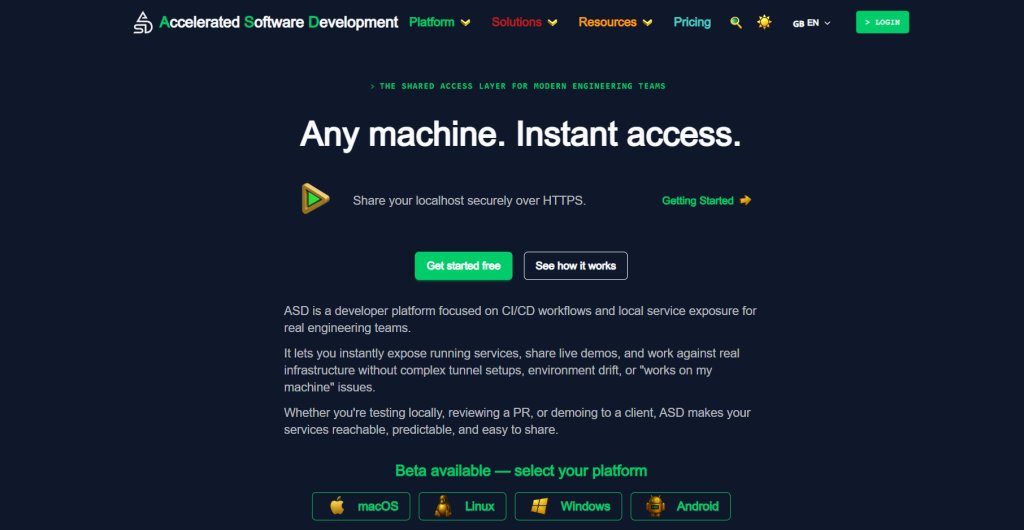
ASD.host (Accelerated Software Development) is a developer-focused platform designed to securely expose local services, streamline testing, and improve CI/CD efficiency — without messy network configurations or fragile tunnel setups.
The Hidden Friction in Development
If you’ve ever had to:
- Open firewall ports manually
- Configure reverse proxies on the fly
- Share unstable preview links
- Push half-finished work to staging just to test a webhook
…then you know how much time infrastructure friction can waste.
ASD.host removes that friction by making it simple to expose local services instantly and securely. Instead of complicated setup processes, developers can focus on what they do best: building.
Built Around Real Engineering Workflows
ASD.host isn’t trying to replace your entire stack. It integrates into your existing development and CI/CD processes.
The platform allows teams to:
- Expose services running locally with secure HTTPS access
- Share live demos instantly with teammates or stakeholders
- Validate integrations in real time
- Debug workflows directly during CI/CD runs
This means fewer “works on my machine” surprises and faster feedback loops across the team.
More Than Just a Tunnel
While many tools offer basic tunneling, ASD.host takes a more structured approach.
It emphasizes:
- Controlled access via token-based authentication
- Predictable service routing
- Cleaner workflow integration
- A CLI-driven experience built for engineers
This makes it suitable not only for solo developers but also for growing teams that need consistency and reliability.
CI/CD Without the Bottlenecks
Continuous integration and deployment are essential for modern software delivery — but they can become slow and complex when services aren’t easily accessible.
ASD.host allows developers to expose services during pipeline execution, test external callbacks, and validate behavior in real time. Instead of waiting for full deployments to staging environments, teams can catch issues earlier and move faster.
The result? Shorter release cycles and fewer last-minute surprises.
Designed for Teams That Ship
ASD.host reflects a clear philosophy: simplify what slows teams down.
It doesn’t overwhelm you with unnecessary complexity. Instead, it improves one critical part of development — secure and structured service exposure — and does it well.
For startups, it reduces setup time.
For scaling teams, it adds predictability.
For DevOps engineers, it removes repetitive manual tasks.
Final Thoughts
In today’s development landscape, speed and collaboration are everything. But speed without structure creates chaos.
ASD.host strikes the balance — giving teams a reliable, secure way to share, test, and validate services without disrupting their workflow.
If your team is tired of patchwork tunnel setups and staging delays, ASD.host offers a modern, developer-first solution built for how software is actually created today.
International Women’s Day on March 8th is about celebrating women in every stage of life — growing, leading, nurturing, creating, and inspiring. While flowers and gifts are thoughtful, there’s something even more meaningful: capturing this chapter of your life with professional portraits.
A studio photoshoot in Philadelphia offers a calm, elegant space where you can truly celebrate yourself. Whether you’re expecting a baby, embracing motherhood, or simply honoring your personal journey, this experience becomes a powerful reminder of your strength.
For moms-to-be especially, booking a session with the Best maternity photographer in Philadelphia ensures that your portraits feel refined, flattering, and deeply personal. Professional lighting, curated backdrops, and guided posing create images that feel effortless and timeless.

Why International Women’s Day Is Perfect for Portraits
March 8th is about appreciation — and that includes appreciating yourself.
Life moves quickly. Pregnancy passes. Children grow. Seasons change. A studio photoshoot allows you to pause and preserve the beauty of this exact moment.
Unlike outdoor sessions that depend on weather, a studio environment offers consistency and privacy. You can focus entirely on feeling confident, comfortable, and radiant.
The Studio Experience Makes All the Difference
A professional studio session in Philadelphia provides:
- Soft, controlled lighting for flattering results
- Elegant backdrops that highlight natural beauty
- A relaxed atmosphere without outside distractions
- Expert direction so you never feel unsure in front of the camera
You don’t need modeling experience. You don’t need to know how to pose. The right photographer guides you every step of the way, creating images that feel natural and authentic.
A Meaningful Gift That Lasts Forever
Looking for a powerful Women’s Day gift idea?
A studio photoshoot is unforgettable. It’s thoughtful. It’s empowering. And it creates memories that will last far beyond March 8th.
Partners can surprise their wives. Families can celebrate a mother-to-be. Women can choose to honor themselves with a confidence session.
Unlike temporary gifts, portraits become heirlooms.
Make This March 8th About You
International Women’s Day is about strength, resilience, and beauty — inside and out.
A studio photoshoot in Philadelphia transforms that message into something tangible. It captures your glow, your confidence, your story.
This March 8th, celebrate more than just the day. Celebrate yourself — and preserve the moment forever.
March 8th — International Women’s Day — isn’t just another holiday. It’s a meaningful opportunity to celebrate the women who inspire, support, and lead in our lives. Whether you’re honoring your mom, partner, sister, friend, or colleague, this day deserves more than a rushed gift.
The best celebrations feel personal. And nothing feels more personal than carefully chosen flowers.
If you’re planning in advance, choosing a reliable Best florist Norwalk, CT helps ensure your bouquet is fresh, beautifully designed, and delivered exactly when it should be. March 8th is one of the busiest floral days of the year, so preparation truly makes a difference.

Why Flowers Still Speak the Loudest
There’s a reason flowers have been the symbol of appreciation for generations.
They’re elegant.
They’re emotional.
They’re timeless.
Soft pink roses can express gratitude. Bright tulips represent admiration and renewal. Yellow blooms bring warmth and positivity. Each arrangement can reflect personality, mood, and intention.
And on March 8th, intention is everything.
How to Choose the Right Arrangement
When selecting flowers, think beyond just “pretty.”
Ask yourself:
- What colors does she love?
- Does she prefer classic or modern styles?
- Would she appreciate something bold or soft?
A minimalist bouquet can feel chic and refined. A full, vibrant arrangement can feel joyful and celebratory. The key is matching the bouquet to the person — not just the occasion.
Timing Is Everything
Waiting until the last minute can limit your options. The best arrangements often sell out quickly for March 8th.
Plan to:
- Order at least a few days early
- Confirm delivery time
- Add a heartfelt message
- Consider surprise delivery to work or home
These small planning steps turn a simple gift into a moment she won’t forget.
Elevate the Experience
If you want to go a step further, pair flowers with:
- A handwritten card
- A favorite coffee or dessert
- A spa gift set
- A lunch or dinner reservation
The goal isn’t extravagance — it’s thoughtfulness.
Make March 8th Meaningful
International Women’s Day is about recognition and appreciation. It’s about acknowledging strength, resilience, and everyday impact.
A beautiful bouquet, delivered with care and chosen with intention, says more than you think.
Plan early. Choose quality. Celebrate with heart.
That’s how you truly honor March 8th.
Let’s face it — New York City is iconic, but it’s not for everyone. After the pandemic, the rent spikes, the daily grind, and now the rise of remote work, a growing number of New Yorkers are asking: What’s life like outside the five boroughs?
For many, the answer is just across the border: Connecticut.
Whether you’re burnt out on city life or just ready for a lifestyle shift, here’s an honest look at what life in Connecticut offers instead of NYC — from affordability and space to schools, safety, and sanity.
1. More Space, Less Stress
If you’ve spent any time in NYC, you know the struggle: tiny kitchens, thin walls, no closet space, and zero room to breathe.
In Connecticut:
- You can actually have a separate office, not just a desk in the corner.
- Backyards are a thing. So are porches, patios, and gardens.
- Quiet is normal — not a luxury.
That sense of mental space? It’s real. And for many former New Yorkers, it’s the number one reason they made the move.
2. Affordability (Yes, Even in 2026)
New York rent remains sky-high in 2026. Meanwhile, Connecticut offers more home for less money — and you still stay connected to the city when you want to be.
Average Monthly Rent Comparison (2026):
| Location | 1-BR Apartment | 3-BR House |
| Manhattan | $3,800 | $6,000+ |
| Brooklyn | $3,200 | $5,200 |
| Stamford, CT | $2,200 | $3,800 |
| New Haven, CT | $1,700 | $3,200 |
Even if you’re not buying a house, you’ll get more for your money, and probably your own laundry, parking, and actual storage.
3. Great Schools Without the Competition Olympics
NYC has some amazing schools — if you can get into them. From navigating zoned districts to waiting lists and lotteries, it can feel like a second job.
In Connecticut:
- Many towns have top-rated public schools that don’t require special applications.
- School rankings in places like Westport, Darien, and Glastonbury are among the best in the nation.
- Smaller class sizes, more campus space, and real community involvement are standard.
You get to focus on your kid, not just the system.
4. Community That Feels Like… Community
NYC has its own kind of neighborhood energy — but let’s be honest, it’s easy to feel anonymous.
In Connecticut towns:
- People say hi at the grocery store.
- Local coffee shops remember your name.
- You actually get to know your neighbors — not just hear them through the wall.
Whether you’re moving with kids or solo, that smaller-town vibe hits different when you’ve spent years surrounded by millions of strangers.
5. Nature, Parks, and a Breath of Fresh Air
If you’re the type who needs a walk in the park to decompress, Connecticut is a paradise.
What you’ll find instead of concrete:
- Beaches on the Long Island Sound
- Forest hikes, rivers, and waterfalls
- State parks like Sleeping Giant, Devil’s Hopyard, and Kent Falls
- Space for biking, kayaking, skiing — all within a couple hours
And no, you don’t have to drive far. Many Connecticut towns have nature right in your backyard.
6. A Growing Food, Culture & Coffee Scene
Connecticut isn’t just diners and Dunkin’ anymore (though we still love both). In 2026, the state is full of unexpectedly cool places to eat, shop, and hang out.
- New Haven’s food scene is next level — pizza, yes, but also global eats and fine dining.
- Towns like West Hartford, Mystic, and Fairfield are packed with independent restaurants, coffee shops, breweries, and boutiques.
- Live music, art walks, and outdoor markets are regular events, not rare finds.
Think of it like Brooklyn energy — without the $19 cocktails.
7. You’re Still Close to NYC (When You Want It)
Let’s be clear — moving to Connecticut doesn’t mean saying goodbye to NYC forever.
Here’s the deal:
- Metro-North trains from Stamford, Greenwich, and Fairfield get you to Grand Central in under 70–90 minutes.
- You can work in NYC part-time, catch a Broadway show, or hit a concert — and still be back in bed by midnight.
- For hybrid workers, it’s the perfect basecamp: access without the chaos.
You don’t lose the city. You just gain a choice.
8. It’s Not Just for Families Anymore
Yes, Connecticut is great for raising kids. But in 2026, it’s also becoming a haven for:
- Remote workers who want more space and fewer distractions
- Young couples priced out of Brooklyn and looking to buy
- Creators and entrepreneurs building businesses out of home studios or coworking hubs
- Even singles who are just done with the noise and want a new pace of life
New energy is flowing into CT towns — and they’re responding with better food, more culture, and fresh ideas.
9. Lower Stress, Real Balance
Maybe the biggest shift isn’t financial or physical — it’s emotional.
Leaving NYC for Connecticut gives many people a new rhythm:
- Less time commuting, more time for life
- Less noise, more clarity
- Less pressure, more presence
If you’re over the hustle, or if you love your job but not your lifestyle, this is where it starts to feel easier.
New York City is electric. There’s no denying it. But in 2026, more people than ever are asking a simple question: Is the chaos still worth it?
For a growing number of New Yorkers, the answer is no — and their next move is just a short train ride away: Connecticut.
If you’re done paying $4,000 a month for a shoebox or dreaming of a backyard you don’t have to share with five other tenants, it might be time to rethink your zip code. Here’s what life in Connecticut actually looks like in 2026 — and what it offers instead of NYC.
1. More Home, Less Hype
In NYC, you might be paying a premium for a 500-square-foot walk-up with a mini-fridge. In Connecticut? That same monthly cost could get you:
- A two-bedroom with a backyard
- Your own laundry
- A real kitchen you can turn around in
- Bonus: peace and quiet
Towns like Stamford, Fairfield, and Milford offer real space without sacrificing city access.
2. Your Budget Stretches Further (Finally)
Living in Connecticut doesn’t mean you’re living cheap — but it means you’re not overpaying for everything.
| Expense | NYC Average | Connecticut Average |
| 1BR Rent | $3,600 | $1,900–$2,400 |
| Monthly Transit | $138 | $0–$80 |
| Coffee | $5.50 | $3.75 |
| Dinner for Two | $120+ | $70 |
The result? You can actually save money and still enjoy your lifestyle.
3. You’re Still Connected to NYC
A huge reason people stay in NYC is because of the access. But here’s the twist: you don’t lose that by moving to Connecticut.
- Metro-North trains from Stamford, Norwalk, or New Haven get you to Manhattan in under 90 minutes
- Hybrid workers commute only 2–3 times a week
- You can work from home, enjoy a backyard lunch break, then head to the city for a Friday dinner
In 2026, the “live in CT, work in NYC” setup is more common than ever — and it works.
4. A Healthier Pace of Life
You know that NYC feeling — always rushing, always hustling, always wired? It’s exciting… until it’s exhausting.
Connecticut offers a different vibe:
- Slower mornings, calmer commutes
- Access to nature, hiking, and coastline
- Less noise, less stress, less sensory overload
- More presence, more balance
You’ll still work hard. But you might actually sleep better.
5. Nature is in Your Backyard — Not a Weekend Trip
Central Park is beautiful, sure. But imagine stepping outside to trails, lakes, and beaches — without planning a getaway.
In Connecticut, nature isn’t an escape. It’s part of life.
- Sleeping Giant State Park (near New Haven)
- Silver Sands Beach (Milford)
- Devil’s Den Preserve (Weston)
- Thimble Islands boat tours (Branford)
Whether you’re into kayaking, hiking, biking, or just laying under a tree — it’s all right there.
6. Better Schools, Without the Battle
In NYC, getting your kid into a decent school can feel like applying to college. In Connecticut?
- Public schools in towns like Westport, Darien, and Glastonbury rank nationally
- Class sizes are smaller
- More funding = better facilities, sports, and support
- You don’t have to move heaven and earth to give your kids a good shot
If education is a priority, Connecticut is a win.
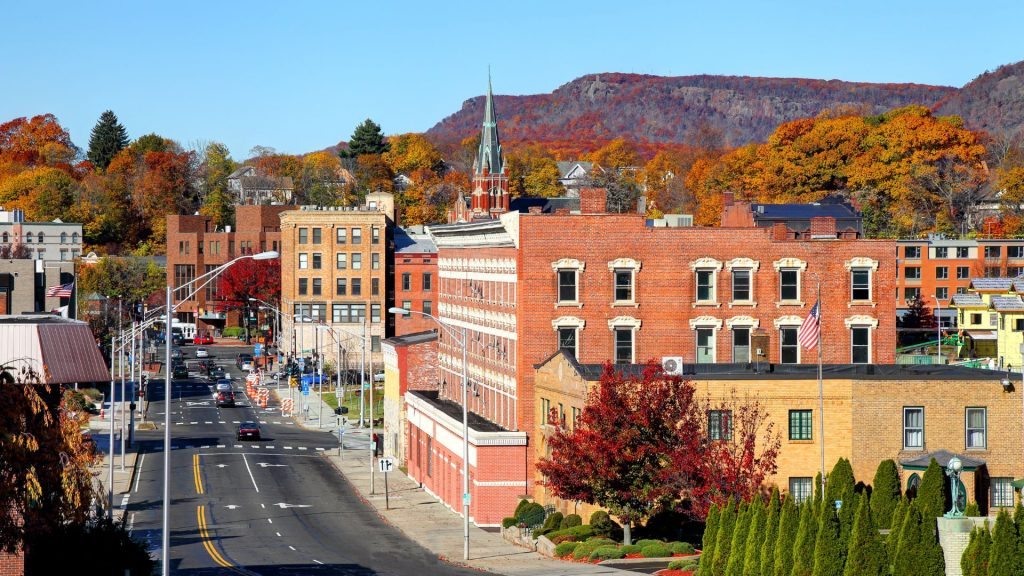
7. Real Community, Not Just Crowds
NYC is full of people — but feeling connected? That’s another story.
In Connecticut towns:
- You’ll get to know your neighbors
- Local businesses remember your name
- There are town fairs, farmers markets, and block parties
- You’ll feel like part of something, not just passing through
The best part? You can still visit NYC when you crave the chaos — but you don’t have to live in it 24/7.
8. Culture Isn’t Just for the City Anymore
You don’t need to be in Manhattan to find good food, music, or art. In 2026, Connecticut has its own scene, and it’s growing fast.
- New Haven: food capital (don’t just go for pizza — trust us)
- Mystic: coastal charm + boutiques + music festivals
- West Hartford: great shopping, cocktails, and young professional energy
- Bridgeport & Norwalk: rising arts hubs with galleries, street art, and local concerts
It’s not NYC scale — but it’s way more accessible, authentic, and local.
9. You’re Not Alone — NYC Transplants Are Everywhere
Think you’ll be the only person making the move? You won’t. Connecticut in 2026 is full of former New Yorkers, which means:
- Instant community
- Familiar energy
- People who understand why you still need a bagel that actually tastes right
You’re not giving up your identity — you’re just giving yourself room to evolve.
10. You Can Breathe — Literally and Mentally
Last but not least: the air is cleaner. The noise is lower. The lifestyle is lighter.
And that weight you didn’t even realize you were carrying in NYC? You start to feel it lift.
It’s not that Connecticut is better than New York. It’s that it offers something NYC can’t: a sense of space — physically and emotionally — to build a life that works for you.
Life in New York City is exciting — but let’s be real, raising a family in a tiny apartment with street noise and sky-high daycare bills isn’t for everyone. The good news? There are amazing towns just outside the city where you can have more space, better schools, and still get to Manhattan when you need to.
In 2026, more young families are leaving the five boroughs and heading to nearby suburbs in Connecticut, New Jersey, Westchester, and Long Island — searching for that sweet spot of peace, affordability, and access.
So if you’re dreaming of a backyard, a good public school, and maybe even your own washer-dryer, here’s your guide to the best places to raise a family near NYC.

1. Scarsdale, NY (Westchester County)
Why families love it:
- Top-rated public schools in the state
- Safe, walkable neighborhoods
- Beautiful parks and tree-lined streets
- 35-minute express train to Grand Central
Yes, it’s pricey — but if education and lifestyle are priorities, it’s a strong contender.
2. Stamford, CT
The Connecticut city with city vibes and suburban perks.
- Great mix of single-family homes and condos
- Excellent schools and early childhood programs
- Coastal access, parks, and public libraries
- Under 1 hour to Manhattan on Metro-North
Bonus: You’ll find other former NYC families everywhere.
3. Maplewood, NJ
Think Brooklyn meets suburbia.
- Walkable downtown with bookstores, toy shops, and family cafés
- Strong arts community and great public schools
- Quick train to NYC via NJ Transit
- Tight-knit community with diverse families and creatives
Maplewood is perfect for city folks who want culture and community without the chaos.
4. Westport, CT
Small-town charm, big-time amenities.
- Excellent public schools ranked among the best in the U.S.
- Beaches, hiking trails, and tons of outdoor activities
- Family-friendly festivals, summer concerts, and a great library
- ~75-minute train to Manhattan
It’s peaceful, upscale, and built for work-life balance.
5. Montclair, NJ
One of the most popular family-friendly commuter towns.
- Diverse, progressive, and full of culture
- Amazing school options and family activities
- Arts scene, great restaurants, and lots of green space
- Under 1 hour to NYC by train
Montclair is where city families go to grow up — without giving up everything they love about urban life.
6. Rye, NY
Coastal Westchester with serious family appeal.
- A+ public schools and top safety rankings
- Beach clubs, nature preserves, and parks
- Easy commute to Manhattan (~45 minutes)
- Picture-perfect neighborhoods for raising kids
It’s polished but down-to-earth — and perfect for raising little ones.
7. Darien, CT
Quiet, classy, and ideal for a family-first lifestyle.
- Top-tier schools and excellent safety
- Family-oriented neighborhoods
- Tons of after-school activities and sports leagues
- Around 60 minutes to NYC by train
Darien offers the kind of structured, supportive environment that families thrive in.
8. Hastings-on-Hudson, NY
Small village vibes with a creative streak.
- Part of the Hastings school district — highly rated
- Walkable downtown with local shops and cafés
- River views, trails, and a real sense of community
- ~40 minutes to Grand Central via Metro-North
If you want low-key charm and high-quality schools, Hastings is a hidden gem.
9. New Canaan, CT
Ideal for families who want classic New England charm.
- High-performing public schools
- Safe, peaceful, and full of green space
- Great town center with parks, shops, and events
- 70-minute train ride to NYC
It’s calm, clean, and built for family life.
10. Pelham, NY
The closest Westchester town to NYC — and a favorite for young families.
- Strong school district with a great early childhood reputation
- Quick 30-minute ride to Manhattan
- Small-town feel with a strong community vibe
- Sports, arts, and outdoor activities for all ages
Pelham gives you the closest taste of suburbia without losing city access.
Things to Consider Before Choosing a Town:
School quality – Not just rankings, but values and fit for your child
Commute time – How often will you or your partner need to be in NYC?
Affordability – Property taxes, home prices, childcare costs
Community – Look for towns with strong parent networks and events
Safety & services – Parks, libraries, after-school programs, and healthcare access
Final Thoughts: Suburbia Isn’t What It Used to Be
Leaving NYC with kids doesn’t mean giving up culture, convenience, or connection. In 2026, the suburbs — especially in Connecticut, Westchester, and New Jersey — are more dynamic, diverse, and family-friendly than ever.
You don’t have to go far to find a place with:
- Room to grow
- A safe place to play
- A strong sense of community
- And a train back to the city whenever you miss it
New York will always be there — but your family deserves space to thrive.
If you’re living in or around New York City in 2026, chances are you’ve asked yourself this question more than once:
Should I rent, or should I buy?
With interest rates still hovering in the mid-5% range, home prices holding strong, and rent not exactly cheap either, the decision isn’t as simple as it used to be. Add in hybrid work, shifting job markets, and evolving lifestyles — and the whole thing gets even messier.
So let’s break it down: what actually makes sense right now — renting or buying — if you’re living near NYC?
We’ll look at numbers, lifestyle, and long-term value so you can make the move that’s right for you.

1. What’s Happening in the NYC Area Market in 2026?
The housing landscape near New York is still adjusting to the post-pandemic reset — but it’s nowhere near crashing.
Here’s the quick 2026 market pulse:
- Home prices remain high in NYC, lower in outer areas like upstate NY or inland CT
- Interest rates are steady around 5.5–6.2% — higher than 2021, but better than 2023’s spikes
- Rent prices are rising again after stabilizing in 2024–2025
- Remote/hybrid work means people are spreading out — and boosting prices in places like Hudson Valley, Long Island, and coastal CT
Bottom line: Both renting and buying are expensive — the question is which offers more value and flexibility for your lifestyle.
2. Renting: The Pros and Cons in 2026
Pros of Renting Near NYC:
- Flexibility — ideal if you might switch jobs, cities, or lifestyles
- Lower upfront costs (just first month + deposit vs. a 20% down payment)
- No property taxes, maintenance, or repairs
- Easier to live in high-demand areas like Brooklyn, Hoboken, or parts of Westchester
Cons of Renting:
- No equity — your rent is gone every month
- Limited control over your space (decor, pets, remodeling)
- Rent increases are back — especially in “hot” towns with city access
- Less long-term stability — your landlord controls your future
Typical rent near NYC in 2026:
| Area | 1-BR Apartment | 3-BR House |
| Brooklyn | $3,200–$3,800 | $5,200+ |
| Jersey City | $2,800–$3,600 | $4,800+ |
| Stamford, CT | $2,000–$2,600 | $3,800+ |
| White Plains, NY | $2,200–$2,800 | $4,200+ |
3. Buying: The Pros and Cons in 2026
Pros of Buying Near NYC:
- You build equity with every mortgage payment
- More freedom: remodel, expand, rent out rooms
- Fixed mortgage = protection from rent spikes
- Potential tax benefits (mortgage interest, property taxes)
- Long-term investment if you stay for 5–10+ years
Cons of Buying:
- High upfront costs: down payment, closing costs, inspections
- Monthly mortgage + property taxes + insurance = $$$
- Market risk — what if prices dip in 2–3 years?
- Less flexibility to move if life changes
Average home prices in 2026 (estimates):
| Area | Median Home Price |
| Brooklyn, NY | $950,000 |
| Yonkers, NY | $600,000 |
| Stamford, CT | $650,000 |
| Montclair, NJ | $750,000 |
| Fairfield County, CT (coastal towns) | $800,000+ |
4. Renting vs. Buying: Which Makes More Financial Sense?
Let’s say you’re debating a $3,200/month rental in Stamford, CT vs. buying a $650,000 home in the same town.
Buying scenario:
- 20% down = $130,000
- Mortgage at 5.8% = ~$3,050/month (principal + interest)
- Add taxes, insurance, maintenance = ~$4,200/month total
Renting scenario:
- $3,200/month, no equity built
- Renter’s insurance = $15/month
- Yearly rent increase ~4–5%
Verdict:
- Buying is more expensive monthly in the short term
- But over 10 years, buying builds wealth — especially if property values increase
- Renting wins for flexibility and lower upfront cash
- Buying wins for stability, long-term payoff, and wealth building
5. Who Should Rent Near NYC in 2026?
Renting may be better for you if:
- You’re not sure where you want to live long-term
- You plan to move in under 3–5 years
- You don’t have the savings for a down payment
- You work remotely and want flexibility
- You want to test-drive a town or neighborhood before committing
Renting lets you keep your options open, which matters a lot in a world where jobs, cities, and life plans change fast.
6. Who Should Buy Near NYC in 2026?
Buying may be your best bet if:
- You’re ready to settle down for 5+ years
- You want to stop throwing money into rent
- You have savings and solid credit
- You’re tired of moving and want a home you can make your own
- You’re thinking long-term about building wealth, not just saving cash
Buying is for those ready to plant roots — not just ride out the market.

7. What’s Trending in 2026: “Rent-to-Wait” Buyers
A growing trend in 2026 is what realtors call the “rent-to-wait” crowd — people who want to buy but are waiting for the right rate, the right house, or the right time.
They often:
- Rent in the town they want to eventually buy in
- Save aggressively while they rent
- Stay close to their target neighborhoods so they’re ready to jump in
Pro tip: If that’s you, treat your renting period like a homeownership warm-up — track homes, attend open houses, and meet local agents early.
Final Thoughts: Renting vs. Buying Near NYC in 2026
There’s no one-size-fits-all answer. The right move depends on your lifestyle, your finances, and your future plans.
Choose renting if you want:
- Flexibility
- Lower upfront costs
- Time to explore towns and neighborhoods
Choose buying if you want:
- Long-term stability
- A place to call your own
- An investment in your future
In 2026, it’s not about “right or wrong.” It’s about what fits your life — right now.
The 9-to-5 office grind is no longer the rule — and in 2026, hybrid work has completely redefined how and where people live around New York City.
The big move out of Manhattan didn’t end with the pandemic. Instead, it evolved. As more companies embrace a 2–3 day office week, New Yorkers are discovering that they don’t need to live right next to their office tower in Midtown anymore. The result? A wave of strategic relocation across New York, New Jersey, and Connecticut.
If you’re trying to figure out where to live with a hybrid job — or just curious how work is reshaping the NYC region — here’s what’s happening right now.

1. The 2026 Hybrid Work Model: What It Actually Looks Like
By now, most companies around NYC have adopted some form of hybrid work. That means:
- 2–3 days in the office, usually Tuesday through Thursday
- Optional or remote Mondays and Fridays
- Monthly in-person meetings or team events
- Greater flexibility in when and how employees commute
This setup is driving a shift in housing — people no longer need to live in the city. They just need to live near enough to access it when necessary.
2. The 90-Minute Radius: The New Sweet Spot
In the past, anything over 45 minutes felt like a painful commute. Now? 90 minutes is the new normal — because you’re only making the trip a few times a week.
That opens the door to towns that were once considered “too far,” including:
- Stamford, Norwalk, Fairfield (Connecticut)
- Montclair, Maplewood, Summit (New Jersey)
- Peekskill, Cold Spring, Beacon (Upstate NY)
People are realizing they can trade daily chaos for a longer—but less frequent—commute and gain space, affordability, and peace.
3. Home Offices Are a Must-Have Now
The open-concept living room/office/kitchen isn’t cutting it anymore.
Hybrid workers are looking for homes with:
- Dedicated office space or extra bedrooms
- Strong Wi-Fi infrastructure (many towns now advertise gig-speed fiber)
- Quiet neighborhoods with access to nature
- Soundproofing and space for Zoom calls without distractions
This is why many are leaving apartments for townhomes, condos, or single-family homes in less dense areas.
4. Towns Near NYC Are Adapting Fast
Local governments and developers are catching on. In towns around NYC, you’re now seeing:
- New coworking spaces in suburbs and smaller cities
- More coffee shops and libraries with strong internet and quiet work areas
- Public transportation schedules adjusted for midweek commuters
- Apartment buildings with built-in work lounges and conference rooms
Example: Stamford, CT, added over 15 coworking-friendly spaces since 2024. Ridgewood, NJ, now has coworking clubs tailored to hybrid parents with childcare options.
5. The Rise of the “Weekender Work Hack”
Some professionals are living full-time in the suburbs and using hybrid work to enjoy long weekends — in the city or out of it.
- In-town crash pads: Some keep a small rental in NYC for occasional stays
- Reverse weekenders: Live in the suburbs and visit NYC for social time
- Extended weekend travel: Work remotely Friday and stay an extra day wherever
This freedom is reshaping not just where people live — but how they live.
6. Young Professionals Are No Longer Locked Into Manhattan
In 2026, younger workers are embracing hybrid work to live smarter, not closer.
Why they’re spreading out:
- Studio rents in Brooklyn are still pushing $3,000+
- Shared housing options in Westchester, Jersey, and CT offer more room
- Train lines are faster, and Wi-Fi on Metro-North/NJ Transit is stronger than ever
- Lifestyle is prioritized: proximity to nature, gyms, friends, and activities
Hybrid workers under 35 are choosing places like Tarrytown, Jersey City, and New Haven to get more value while staying connected.
7. Families Are Making the Move Sooner
Traditionally, city families didn’t leave until the kids were ready for kindergarten. Now? Many are heading to the suburbs as early as daycare.
Why:
- Better housing options with home offices + outdoor space
- More affordable childcare
- Safer neighborhoods
- Top-tier public schools just outside city limits
Hybrid schedules make it easier for parents to juggle commuting, parenting, and remote work — and places like Westport, Pelham, and Montclair are booming as a result.

8. Investors Are Following the Migration
Real estate investors are no longer focusing exclusively on NYC proper.
Now hot:
- Multi-family homes in commuter towns (e.g., White Plains, Norwalk)
- New construction in walkable suburbs with train access
- Mixed-use developments in urban-light areas like New Rochelle or Yonkers
- Rental homes near schools and coworking spaces
The hybrid wave means more long-term renters want homes that feel like ownership — and investors are stepping in to meet that demand.
9. Who’s Staying in the City — and Why
Not everyone’s leaving NYC. Hybrid or not, plenty of people still love the city’s energy.
They’re staying because:
- They walk to the office 2x a week
- They value proximity to culture, food, and social life
- Their industries still thrive in-person (fashion, finance, media)
- Their apartments work for remote life
But even these city dwellers are renting bigger, upgrading buildings, or seeking flexibility, knowing hybrid life isn’t temporary — it’s the new normal.
10. The New Live-Work Map of Greater NYC
The NYC region used to revolve around midtown Manhattan. Now? It’s more like a constellation.
- NYC core: For fully in-person workers and hybrid minimalists
- Inner-ring suburbs: Hoboken, Astoria, and White Plains — for fast commutes
- Outer-ring towns: Stamford, Summit, Beacon — for more space and flexibility
- Remote-first clusters: New Haven, Kingston, Newburgh — lifestyle-first, office-sometimes
Where you live depends less on where you work — and more on how you work.
Looking to start something of your own? You’re not alone. In 2026, thousands of entrepreneurs across the Northeast are ditching the corporate grind to build profitable, local small businesses — especially in New York and Connecticut.
What’s driving the shift? A few things:
- Hybrid and remote work creating demand for new services
- Local-first shopping and dining trends
- A booming population shift to suburbs and smaller cities
- Supportive state and local programs for new business owners
If you’re thinking about launching a business, here’s your insider’s guide to the most promising small business opportunities in the region this year — plus the trends shaping the local economy.
1. Remote Work–Friendly Cafés & Co-Working Spaces
Why it’s hot:
With hybrid work now the norm, people want places that offer good coffee, strong Wi-Fi, and a vibe that supports focus and connection.
Great spots to launch:
- Stamford, CT – Huge remote worker population, near NYC
- Hudson Valley, NY – Popular with creatives and freelancers
- Norwalk, CT & Westchester County, NY – Underserved areas with lots of commuters
Pro tip: Add a meeting room or podcast booth to attract professionals.
2. Pet Services & Pet-Friendly Businesses
Why it’s booming:
The pandemic pet boom never slowed down. With more people working from home, they’re spending more on dog walking, grooming, day care, and boutique pet products.
In-demand business ideas:
- Mobile pet grooming vans
- Pet cafés or bakeries
- On-demand dog walking apps or concierge services
Hot areas: Brooklyn, Fairfield County, and New Haven.
3. Wellness Studios & Mobile Fitness
What’s trending in 2026:
People want fitness that fits their lifestyle — not the other way around. That means:
- Mobile yoga or Pilates instructors
- Small-group fitness studios (especially for moms, seniors, or remote workers)
- Recovery services like infrared, cryotherapy, and stretch therapy
Top cities:
- White Plains, NY
- West Hartford, CT
- Montclair, NJ
Bonus: Many commercial landlords are now offering short-term leases to help new fitness startups.
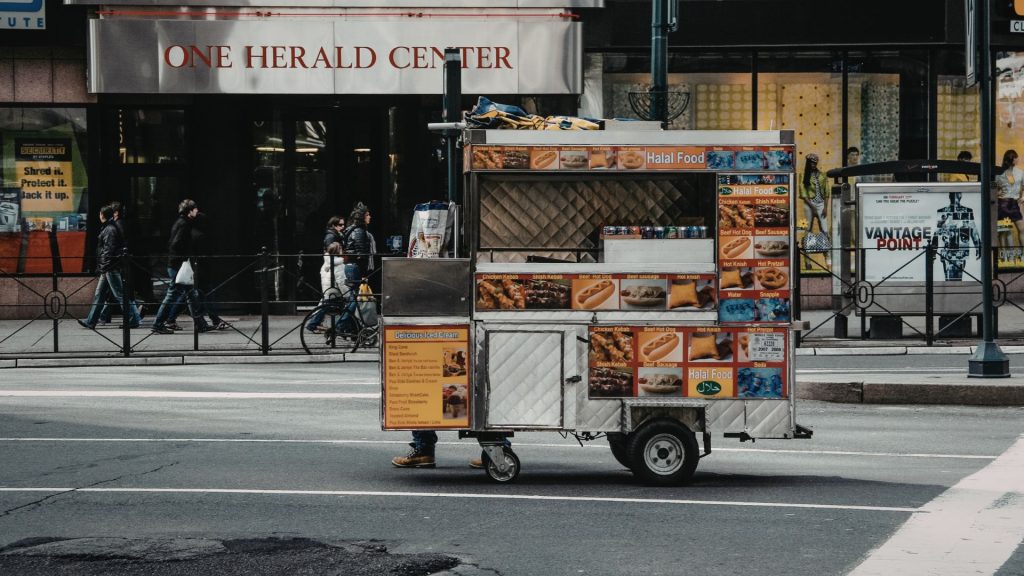
4. Local Food Trucks & Micro-Restaurants
The new way to dine:
Instead of opening a full-service restaurant with massive overhead, many entrepreneurs in 2026 are starting with:
- Pop-up kitchens
- Food trucks
- Takeout-only “ghost” kitchens
Big demand for:
- Global street food
- Vegan comfort food
- High-quality coffee & pastry trucks
Best markets:
- Yonkers, NY
- Stamford & New Haven, CT
- Bronx suburbs with rising young populations
5. Senior Care Services
Big opportunity, big need:
With an aging population in both NY and CT, senior-focused businesses are thriving — especially in-home services.
Ideas include:
- In-home medical support or companionship services
- Transportation for seniors
- Mobile tech help (helping seniors set up phones, apps, or Zoom calls)
- Errand-running or grocery delivery services
Growing towns for this: Greenwich, Scarsdale, Trumbull, Westport.
6. Eco-Friendly Home & Garden Services
Why now:
Sustainability is no longer a trend — it’s a lifestyle. Homeowners are investing in:
- Organic lawn care
- Native landscaping and pollinator gardens
- Compost pickup services
- Solar panel consultations for small properties
Where it’s working:
- Suburban CT towns like Ridgefield and Guilford
- Westchester neighborhoods like Pleasantville and Larchmont
- Even NYC brownstone neighborhoods with green-conscious families
7. Childcare & Enrichment Programs
Parents need help — especially hybrid parents.
Childcare is still a challenge in many areas. But parents are also looking for:
- After-school STEM or art programs
- Weekend enrichment camps
- Babysitting collectives or “parent co-op” services
- Tutoring and homework help centers
Emerging hubs:
- Astoria & Forest Hills (NYC families looking for local options)
- Stamford & Fairfield
- Northern NJ towns like Montclair and Maplewood

8. E-commerce Fulfillment & Product-Based Startups
If you’re product-focused:
You don’t need a storefront to build a retail brand in 2026. Shopify, TikTok Shops, and Etsy are exploding — but small fulfillment centers, pack-and-ship services, or niche product lines are taking off.
Sell from anywhere, but consider basing operations in:
- Lower-rent zones like Yonkers, Bridgeport, or upstate NY
- Near shipping hubs (especially for custom/personalized goods)
Bonus trend: Locally made products get more attention than drop-shipped ones.
9. Language, Tech, and Life Skills Tutoring
For creators, teachers, and service pros:
If you’ve got a skill, you can teach it locally or online. High demand in 2026 for:
- Coding bootcamps or tech skills workshops
- SAT prep or college consulting (in wealthy CT/NY suburbs)
- ESL tutoring or conversation groups
- Life coaching, parenting classes, or financial literacy series
Make it local, then scale it digital.
10. Home Services & Trades
Still one of the safest bets:
With more people buying older homes or moving out of the city, there’s a huge shortage of contractors and home service pros.
Start small with:
- Painting or handyman services
- Renovation consulting (remote or local)
- Smart home installations
- Cleaning businesses (residential + short-term rentals)
Underserved markets: Westchester, coastal CT towns, and Hudson Valley.
Support for Small Businesses in NY & CT (2026)
Both states are actively encouraging small business growth with:
Grants & programs:
- NY Small Business Recovery Grant Program
- CT Small Business Boost Fund
- Local Chambers of Commerce hosting pitch events & funding contests
Tax breaks & credits:
- For minority-owned, women-owned, or veteran-owned startups
- Green business incentives
- First-time business owner tax support
Incubators & co-working spaces:
- NYC: Made in NY Media Center, Brooklyn Navy Yard
- CT: District New Haven, The Work Space in Manchester, CTNext programs
In 2026, artificial intelligence in the United States no longer feels futuristic or flashy. There are no flying cars, no robot neighbors knocking on your door. Instead, AI has blended into daily life so smoothly that many people barely notice it’s there. And that’s exactly what makes this moment interesting.
This year marks the point where AI stops being a “tech trend” and becomes quiet infrastructure — like electricity or the internet — powering decisions, services, and routines across the country.

AI Is No Longer Just for Big Tech Cities
One of the biggest shifts in 2026 is where AI is being used. It’s not limited to Silicon Valley or major metropolitan hubs anymore.
Small and mid-sized towns across the U.S. are using AI to:
- Optimize traffic lights and reduce congestion
- Predict water pipe failures before they happen
- Improve emergency response times
- Manage local energy grids more efficiently
For many communities, AI isn’t about innovation headlines. It’s about saving money, reducing downtime, and making local government work better with limited staff.
Healthcare Feels More Personal — and Less Rushed
In 2026, AI has become a silent assistant in American healthcare. Patients may not see it directly, but they feel the difference.
AI systems now help doctors:
- Review medical scans faster and with fewer errors
- Spot early warning signs in routine lab results
- Personalize treatment plans based on patient history
For patients, this means shorter wait times, clearer explanations, and fewer repeat visits. The technology isn’t replacing doctors — it’s giving them more time to actually talk to people.
Workplaces Are Smarter, Not Harder
The American workplace in 2026 looks calmer on the surface, but much more efficient behind the scenes.
AI tools quietly handle:
- Scheduling meetings across time zones
- Drafting first versions of reports and emails
- Analyzing sales and performance data in real time
As a result, many professionals are spending less time on repetitive tasks and more time on decision-making and creative work. The biggest change isn’t job loss — it’s how workdays feel less chaotic than they did just a few years ago.
AI Is Helping the Energy Transition Feel Practical
Sustainability in the U.S. has moved past slogans in 2026. AI is playing a major role in making clean energy usable at scale.
Across the country, AI helps:
- Balance solar and wind energy on local grids
- Predict peak demand more accurately
- Reduce power outages during extreme weather
This has made renewable energy more reliable, especially in states dealing with heat waves, storms, and aging infrastructure.

The Real Story of AI in 2026: Normalcy
What makes AI in the United States in 2026 truly fascinating isn’t dramatic breakthroughs — it’s normalcy.
AI doesn’t announce itself anymore. It simply works in the background:
- Making systems faster
- Reducing human error
- Freeing people to focus on what matters
For most Americans, the question is no longer “Will AI change our lives?”
It already has — quietly, steadily, and in ways that finally feel useful.
Final Thoughts
2026 may not be remembered as the year AI shocked the world. Instead, it may be remembered as the year AI settled in.
And sometimes, the most important changes are the ones that don’t demand attention — they just make life work a little better every day.
If you want, next I can:
- Write a more provocative trend-focused article
- Adapt this for SEO or a blog
- Narrow it to business, healthcare, or everyday consumers